
Brand Logo

Applications

Energy storage applications shaped by duty cycle and project risk

From grid services to commercial backup, the right battery system is selected by operating profile, safety pathway, and lifecycle economics.

Samsung Sdi application discussions begin with the work the battery must perform. A system built for daily solar shifting has a different stress profile than one reserved for backup power, frequency response, or microgrid black-start support. Defining that work early protects both the technical design and the commercial model.

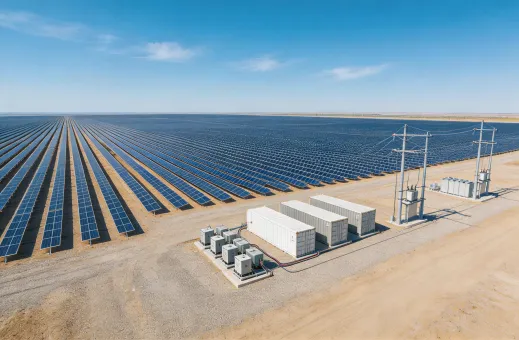
Utility solar battery storage site

Utility-scale renewables

Battery blocks support peak shifting, curtailment reduction, ancillary services, and dispatch commitments when modeled with grid interconnection limits. Utility projects need traceable assumptions for usable capacity, augmentation, round-trip efficiency, and availability because small modeling gaps can affect long-term revenue.
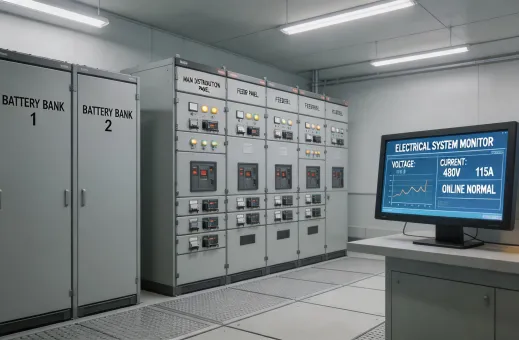
Commercial energy storage installation

Commercial facilities

Facilities use storage to manage demand charges, backup critical loads, and integrate onsite solar without exposing operations to unstable assumptions. Commercial owners also need service access, fire review, metering logic, and maintenance responsibility defined before installation scheduling begins.

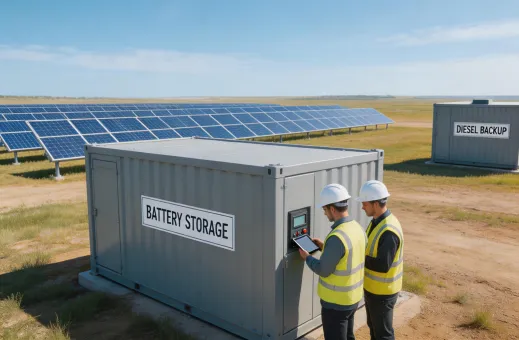
Microgrid battery containers

Microgrids and resilience

Remote and resilience projects need documented autonomy targets, black-start behavior, battery protection, and maintenance access planning. For microgrids, Samsung Sdi helps teams discuss generator coordination, PV charging windows, and operator alarm workflows in one technical package.

4 hrcommon peak-shift duration
<3%THD target at PCS interface
90%DoD modeling scenario
10 yrbattery capacity warranty planning
Selection Considerations

LFP vs. NMC battery chemistry: a transparent trade-off

Battery chemistry is the most consequential decision in any energy storage project. We do not recommend a single answer for every customer; the choice depends on safety priorities, available footprint, and total cost over the system life. Both options are presented here so procurement and engineering teams can decide on common evidence.

Lithium Iron Phosphate (LFP)

Thermal runaway onset above 270 C, cycle life typically rated 6,000+ cycles at 90% DoD per IEC 62619 testing, and lower LCOS over a 15-year window. Now the dominant chemistry in residential and utility BESS, with UL 9540A test reports widely available.

Nickel Manganese Cobalt (NMC)

Energy density roughly 30-40% higher than LFP, smaller cabinet footprint per kWh, and proven track record in EV applications. Better suited to space-constrained commercial rooftops and projects where weight or volume is the binding constraint.

Samsung Sdi can share UL 9540A test summaries, IEC 62619 reports, and round-trip efficiency data on request so the trade-off is decided on numbers, not marketing.

Define the duty cycle before choosing the battery block.

Send your use case, available footprint, interconnection constraints, and daily dispatch plan for a structured review.

The response can help clarify which data points belong in the first design review and which items should wait for detailed engineering.